
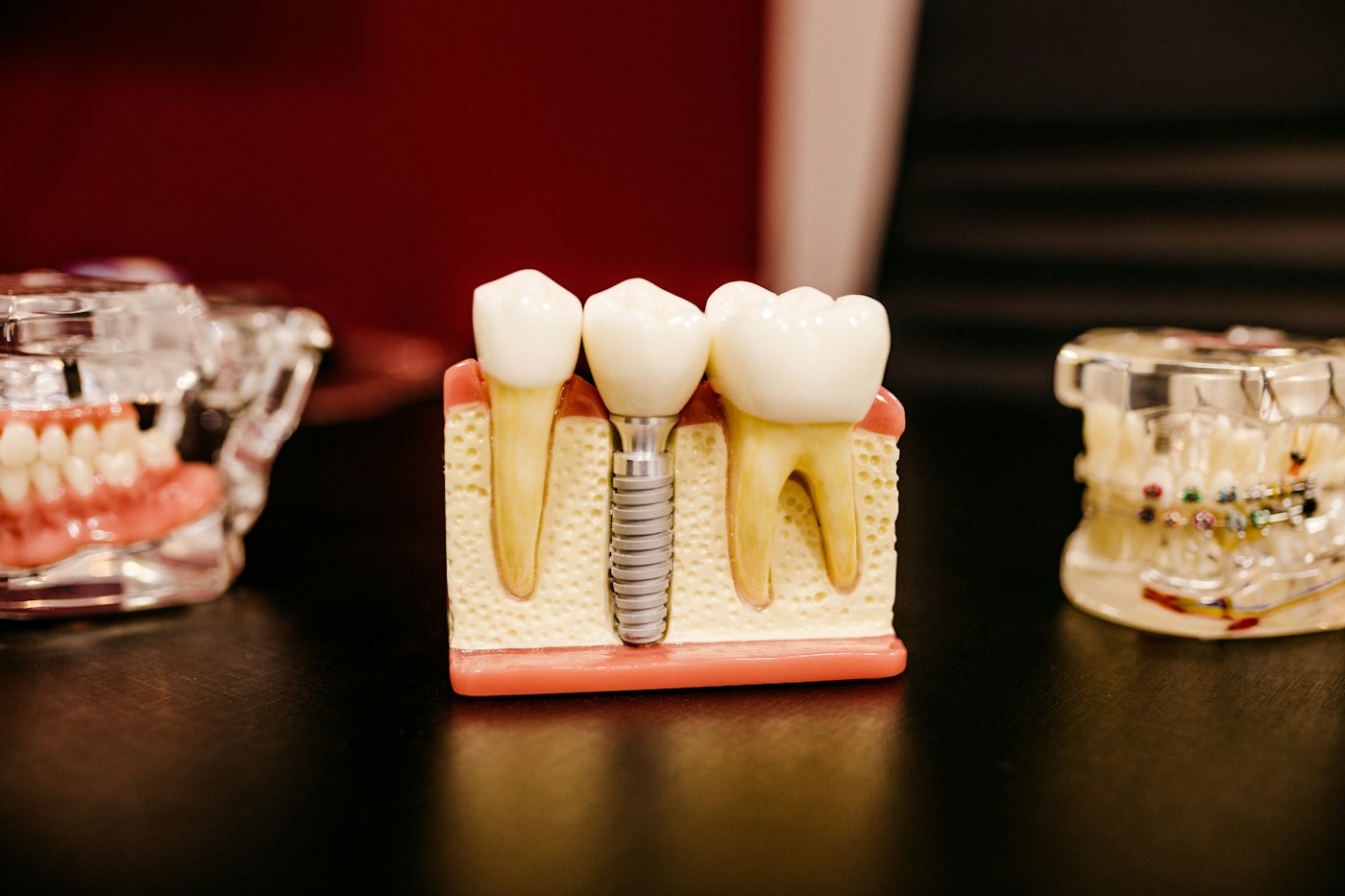
What is a dental implant?
A dental implant is a small titanium post that takes the place of a tooth root. It is placed in the jawbone, where the bone grows around it and holds it firmly. A crown, bridge or full set of teeth is then fixed on top. Because the implant stands on its own, neighbouring teeth do not need to be ground down, as they would for a conventional bridge.
Who is it suitable for?
Implants are an option for adults who are missing one or more teeth and whose jaw has finished growing. Your dentist checks the amount and quality of bone, the health of your gums and your general health. Smoking, uncontrolled diabetes and some medicines can affect healing, so it is important to mention them. If there is too little bone, bone grafting may be discussed first.
How does the treatment work?
Treatment starts with an examination, X-rays and a 3D scan, from which the position of each implant is planned. The implant is placed under local anaesthetic. It then needs time to bond with the bone before the final tooth is fitted; a temporary solution can be worn in the meantime. Your plan states how many visits you need and how far apart they are.
What to keep in mind
An implant is a surgical procedure, so swelling and tenderness in the first days are normal. Long-term success depends heavily on daily cleaning and regular check-ups: gum inflammation around an implant can lead to its loss. Your dentist explains the risks that apply to your situation before you decide.
This page gives general information and does not replace a personal consultation with a doctor.